Equipping Leaders Heading

KEYNOTES - TRAINING - COACHING

Copy of Stop Motivating Header
As Seen on Tv Dr Jason Jones

END STAGNATION. ACTIVATE POTENTIAL.

Roughly 70% of employees are disengaged, lack motivation, and perform far below their potential. This widespread stagnation is one of the greatest drags on business results—and a major source of stress for leaders.

Neuroscience shows that the root of this problem is dormant brainpower: the untapped energy and drive within people that goes unrealized. Unfortunately, most leaders lack the understanding and skill to help their people move beyond average.

When leaders learn and apply neuroscience-based principles—focused on the daily practices of connecting, coaching, and culturing—people flourish. They engage more deeply, contribute more meaningfully, and often exceed their own expectations. Leaders who activate this potential not only elevate performance, they build healthier, more energized teams ready to thrive in today’s demanding workplace.


Get Your Copy Today!

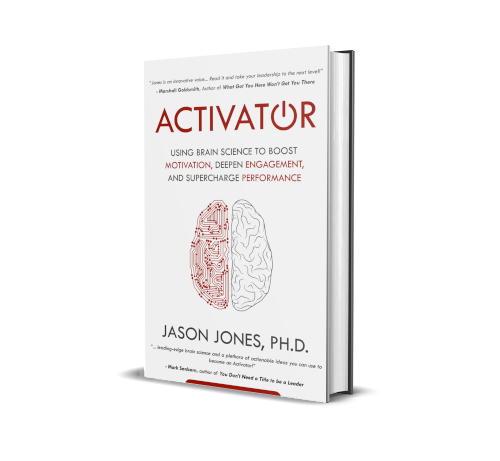
Activate Book Cover 500x500

"Jason is an innovative voice in our new world of work."

- Marshall Goldsmith

TRUSTED BY

Copy of Client List 2-2-23 (1366 × 700 px)

Engaging and inspiring keynote messages that include practical and proven methods to move your people to do more and be more. 

Innovative and challenging leadership training programs that focus on building mindsets and skillsets to be more effective and perform at a high level. 

Learn more about Jason's books and leadership resources that can help you activate the natural energy of others.

Download Your Free Copy!
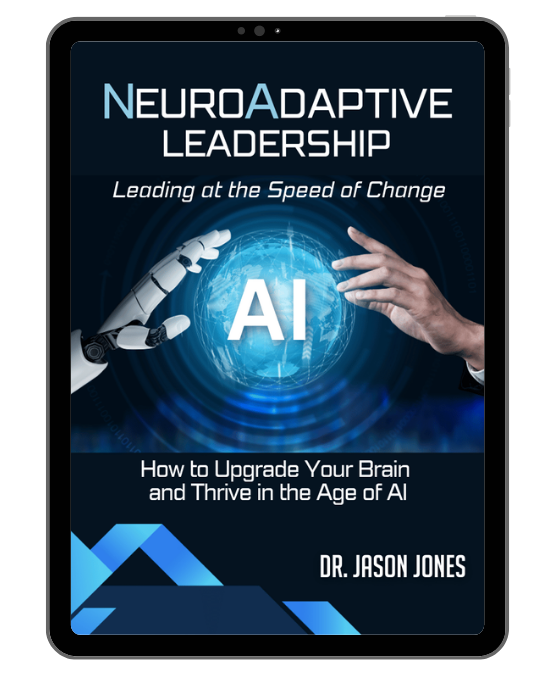
NeuroAdaptive Leadership Mock Up

NeuroAdaptive Leadership Report

How to Upgrade Your Brain and Thrive in the Age of AI. 

The pace of disruption has never been faster—and AI is rewriting the rules of business and leadership. The leaders who will excel in this new era aren’t just adopting new tools; they’re rewiring their brains for sharper thinking, faster adaptability, and deeper human connection.

In this report, Dr. Jason Jones reveals the neuroscience-backed strategies that today’s top leaders are using to:

  • Stay calm and clear under pressure.

  • Make fast, ethical decisions in uncertainty.

  • Build trust and influence in AI-augmented teams.

  • Reframe setbacks into strategic opportunities.

  • Strengthen mental agility to adapt in real time.

  • Harness stress as a performance advantage.

NeuroAdaptive Leadership gives leaders the inner upgrade external strategies can’t.

- Dr. Jason Jones

ARTICLES & VIDEOS

Leadership is defined by complexity, change, tough choices, and presence. Executives are asked to make faster decisions with less certainty, Read more
Rewire Your Brain for Change
Your brain isn’t built for disruption. It’s built for safety, stability, and prediction. But in today’s world, where AI shifts Read more
NeuroAdaptive Leader
The world is changing faster than most of us are prepared for. Technology is advancing at breakneck speed, industries are Read more
Busy Image
Do you ever get frustrated by not accomplishing all the tasks you planned for the day? You wake up energized, Read more
There's a word that we often use to describe a team that's working together and completely in sync. It's not Read more
Visualization, also known as mental rehearsal, is the process of vividly imagining a future event, task, or performance in your Read more
Leadership Isn’t About Being Smart—It’s About How You Use Your Brain When we think of great leaders, intelligence often comes Read more
Have you ever wondered why some teams thrive while others struggle, even when they have similar resources and talent? The Read more
Using storytelling taps into the brain’s emotional and sensory centers, making it a powerful tool for persuasion and engagement. Neuroscience Read more

Why Elite Leaders Invest in Executive Coaching

Leadership is defined by complexity, change, tough choices, and presence. Executives are asked to make faster decisions with less certainty, lead teams through persistent disruption, and maintain high performance without sacrificing their own well-being. In this environment, executive coaching has become one of the most evidence-based methods to strengthen a leader’s capacity and elevate organizational impact.

Research from the International Coaching Federation (ICF, 2023) shows that leaders who engage in professional coaching report increased work performance, improved business management skills, enhanced relationships, and higher levels of well-being. Neuroscience adds an even more compelling dimension: coaching supports neuroplasticity, enabling leaders to rewire the cognitive, emotional, and behavioral patterns that drive long-term success (Rock & Ringleb, 2013).

So what is it about coaching that attracts the best leaders? Is the time and financial investment really worth it?

Here are 5 ways executive coaching helps leaders rise to their next level of influence and performance.

Elevate Critical Thinking and Decision Quality

Executives often face high-stakes decisions in ambiguous conditions. Coaching sharpens cognitive processing by helping leaders slow down mental noise, examine assumptions, and identify hidden biases. Studies on metacognition show that reflective dialogue strengthens cognitive flexibility, the ability to switch perspectives and generate alternative solutions, which is a defining capability of effective leaders (Dajani & Uddin, 2015). A skilled coach guides leaders to:

  • Differentiate urgent from important decisions
  • Identify blind spots in analysis
  • Evaluate second- and third-order consequences
  • Build a more structured decision-making process

The result is clearer thinking, reduced reactivity, and more strategic choices.

Identify Strategic Priorities and Hidden Opportunities

Senior leaders often struggle with competing demands and too many priorities. Coaching creates a structured environment to step back, think strategically, and align decisions with organizational goals. Through guided inquiry and strategic frameworks, leaders learn to:

  • Identify the two or three priorities that matter most
  • Spot emerging opportunities in market and organizational dynamics
  • Distinguish between value creation and noise
  • Allocate time and energy toward high-leverage activities

Strategic clarity leads to better resource allocation and a stronger ability to anticipate change.

Strengthen Confidence and Leadership Presence

Confidence is not simply a personality trait, it is a product of clarity, preparation, and self-regulation. Coaching helps leaders understand their identity as a leader, articulate their strengths, and close credibility gaps.

Evidence from positive psychology shows that leaders who reflect on their values and strengths exhibit greater confidence and social presence, particularly under pressure (Seligman, 2011). Coaches help clients refine communication, executive presence, emotional regulation, and interpersonal influence, capabilities that shape how others perceive and follow them.

Increase Focus, Productivity, and Mental Discipline

Executives often juggle immense cognitive load. Coaching uses behavioral science and performance psychology to help leaders restructure their attention and workflow. This includes:

  • Eliminating low-value activities
  • Building systems for deep work and focus
  • Managing mental energy through neuroscience-based habits
  • Reducing context switching
  • Implementing accountability routines

Research shows that productivity increases when leaders learn to focus on fewer priorities with greater intensity (Newport, 2016).

Clarify Direction and Set Meaningful Goals

High-performing leaders need clarity, both for themselves and for the people they lead. Coaching provides a reflective space to articulate long-term direction, define success, and set measurable goals. A coach helps leaders create alignment between:

  • Strategic objectives
  • Daily behaviors
  • Personal values
  • Long-term career aspirations

This alignment increases motivation and reduces ambiguity for the leader and their team.

Reduce Overwhelm, Distraction, and Burnout

Burnout among executives has reached unprecedented levels. Coaching supports mental resilience by helping leaders recognize overload patterns, implement boundaries, and develop healthier cognitive habits. Research in occupational health psychology shows that leaders who receive coaching report significant reductions in stress and emotional exhaustion (Grant, Curtayne, & Burton, 2009). Coaching empowers leaders to:

  • Redesign workload and expectations
  • Build stronger recovery habits
  • Replace reactive patterns with intentional routines
  • Increase emotional regulation and adaptability

Better well-being directly translates to better leadership.

Navigate Change and Complexity with Greater Agility

Change is no longer a periodic event for leaders; it is a constant condition of modern work. Executive coaching strengthens a leader’s adaptive capacity by helping leaders update their thinking models, expand their tolerance for uncertainty, and lead more effectively through fluid conditions. Coaching develops this flexibility through reflective questioning, scenario thinking, and structured experimentation that helps leaders practice new behaviors in real-world contexts. A coach helps leaders navigate complexity by enabling them to:

  • Recognize outdated mental models that limit agility
  • Strengthen emotional regulation during periods of uncertainty
  • Reframe threats into opportunities for innovation
  • Lead teams through ambiguity with clarity and stability
  • Make decisions based on principles, not pressure

The outcome is a leader who can respond quickly without being reactive, guide others with steadiness during turbulence, and maintain strategic clarity even when conditions shift unexpectedly.

Enhance Trust, Communication, and Relationship Quality

Trust is a leader’s greatest currency. Coaching strengthens interpersonal awareness, empathy, and communication skills that build psychological safety, one of the strongest predictors of team performance (Edmondson, 2019). Through coaching, leaders learn to:

  • Listen at a deeper level
  • Communicate direction with clarity
  • Understand others’ motivations
  • Provide feedback more effectively
  • Build stronger alignment across teams

The result is greater cohesion, higher engagement, and stronger followership.

The Bottom Line… Executive coaching is not about fixing weakness, it is about unlocking potential. It gives leaders expert guidance, structured reflection, and research-backed tools to accelerate growth in ways they cannot achieve alone. In a world defined by complexity and rapid change, coaching is one of the most powerful investments a leader can make to elevate performance, influence, and long-term success.

If you are considering an executive coach, I would be more than happy to give you a complimentary coaching call where we can can discuss your top challenge and determine if coaching is right for you. Email me directly at DrJ@DrJasonJones.com or call me at 1.214.810.4900

About Dr. Jason Jones

Dr Jason Jones Headshot

Dr. Jason Jones is a workplace psychologist and executive coach known for helping leaders think better, influence more effectively, and activate the best in themselves and others. He is a recognized expert in the neuroscience of leadership and the creator of the NeuroAdaptive LeadershipTM framework that strengthens clarity, adaptability, and high performance.


References

Dajani, D. R., & Uddin, L. Q. (2015). Demystifying cognitive flexibility: Implications for clinical and developmental neuroscience. Trends in Neurosciences, 38(9), 571–578. https://doi.org/10.1016/j.tins.2015.07.003

Edmondson, A. C. (2019). The fearless organization: Creating psychological safety in the workplace for learning, innovation, and growth. Wiley.

Feldman Barrett, L. (2017). How emotions are made: The secret life of the brain. Houghton Mifflin Harcourt.

Grant, A. M., Curtayne, L., & Burton, G. (2009). Executive coaching enhances goal attainment, resilience, and workplace well-being: A randomized controlled study. The Journal of Positive Psychology, 4(5), 396–407. https://doi.org/10.1080/17439760902992456

International Coaching Federation. (2023). ICF Global Coaching Study. International Coaching Federation.

Newport, C. (2016). Deep work: Rules for focused success in a distracted world. Grand Central Publishing.

Rock, D., & Ringleb, A. (2013). Neuroscience for leadership: Harnessing the brain gains to improve performance. Palgrave Macmillan.

Rewire Your Brain to Leverage Change

Rewire Your Brain for Change

Your brain isn’t built for disruption. It’s built for safety, stability, and prediction.

But in today’s world, where AI shifts markets overnight and new technologies redefine jobs, leaders who react to change are already behind. Those who attune to it thrive.

Attuning is your ability to anticipate and leverage disruption, rather than reacting to it as a threat. It’s the first skill of NeuroAdaptive LeadershipTM and it transforms fear into fuel.

The Neuroscience of Attunement

Our brains are wired with a prediction system called the predictive coding network. It constantly scans for patterns, compares them to memory, and signals threat or safety. When something unexpected happens the brain’s amygdala fires an alarm.

This alarm floods your system with stress chemicals like cortisol and norepinephrine, preparing you for fight, flight, or freeze. That’s useful for survival, but disastrous for leadership.

Under chronic stress, executive functions in the prefrontal cortex (the part of your brain responsible for judgment, empathy, and strategy) go offline.

Attuning to disruption rewires that process. Instead of being surprised by change, your brain expects it.

When you anticipate volatility, you shift from reactive fear to adaptive readiness, which lowers threat responses and keeps your thinking brain online.

Disruption Types:

There are two types of disruptions we face. Micro and Macro.

  • Micro-disruptions are small, everyday interruptions: a delayed flight, a staff conflict, a software update that changes your workflow. They seem trivial, but how you respond trains your nervous system.
  • Macro-disruptions are large-scale shifts: AI adoption, economic turbulence, global crises. They challenge identity and require systemic adaptation.

Leaders who regularly attune to micro disruptions build neural flexibility to face macro disruptions with calm and clarity. Think of it as mental strength training. Each small challenge you face builds your ability to handle the big ones.

Preparing Your Brain Circuitry

Imagine walking into a haunted house. You know something will jump out. Your heart races, your senses heighten, but you’re not paralyzed because you expect the scare. You attune to your surroundings, breathe through the intensity, and even laugh at the thrill.

That’s the essence of attunement. You’ve primed your brain for surprise. You’re aware, but not afraid. You can choose your reaction.

Leaders can do the same. Anticipating disruption prepares your brain’s threat circuitry so you can stay composed, strategic, and creative, even when the unexpected happens.

Pilot training is a great example of the attuning skill.  Pilots train in simulators for every imaginable disruption: engine failure, weather shifts, and system errors. The goal isn’t to avoid surprises, it’s to become comfortable with them.

This repeated exposure rewires their nervous systems. Under real pressure, pilots remain calm, deliberate, and focused because their brains have learned that disruption is not danger, it’s data. And this clarity allows for focus and accurate decision-making amid the chaos.

Attunement Changes the Brain

Research from Harvard neuroscientist Sara Lazar shows that mindfulness and intentional awareness practices thicken the anterior cingulate cortex (ACC) and prefrontal cortex. These are the brain regions responsible for focus, conflict monitoring, and adaptive control.

So being aware of disruption strengthens the very circuits that help you handle it.

Similarly, studies on stress inoculation a show that controlled exposure to manageable stressors helps the brain build resilience and regulate emotional response. This is how military and emergency leaders prepare for chaos. They repeatedly attune to simulated disruption until calm becomes their default state.

Building Attunement

Here are two neuroscience-based practices to train your brain to attune to disruption instead of avoiding or fearing it:

1. Disruption Scanning (The Daily Mental Warm-Up)

At the start of your day, take 2 minutes to ask:

  • “What changes or uncertainties might I encounter today?”
  • “How will I respond if things don’t go as planned?”

This primes your predictive coding system. When disruption hits, your brain recognizes it as expected, reducing amygdala reactivity. Over time, this rewires your threat response into readiness.

Studies on mental simulation show that visualizing challenges improves performance by activating similar neural pathways as real experiences.

2. Controlled Exposure to Micro-Disruptions

Intentionally introduce small discomforts into your routine:

  • Take a different route to work.
  • Sit in a new seat at the meeting.
  • Ask for feedback you usually avoid.

These small acts teach your nervous system that uncertainty isn’t dangerous, it’s an opportunity for adaptation. You’re building cognitive flexibility, a key trait of adaptive leaders.

In a world of constant disruption, leadership is less about controlling change and more about coordinating with it.

When you attune to disruption, you transform uncertainty into insight. You feel the tremors before the quake and then you stay steady when others spiral.

Remember, effective Leadership isn’t about predicting the future, it’s about preparing your brain to meet it with clarity and courage.

References:

  • Arnsten, A. F. T. (2009). Stress signalling pathways that impair prefrontal cortex structure and function. Nature Reviews Neuroscience, 10(6), 410–422.
  • Clark, A. (2013). Whatever next? Predictive brains, situated agents, and the future of cognitive science. Behavioral and Brain Sciences, 36(3), 181–204.
  • Diamond, A. (2013). Executive functions. Annual Review of Psychology, 64, 135–168.
  • Driskell, J. E., Copper, C., & Moran, A. (1994). Does mental practice enhance performance? Journal of Applied Psychology, 79(4), 481–492.
  • Lazar, S. W. et al. (2015). Meditation experience is associated with increased cortical thickness. NeuroReport, 16(17), 1893–1897.
  • Lieberman, M. D. et al. (2007). Putting feelings into words: Affect labeling disrupts amygdala activity. Psychological Science, 18(5), 421–428.
  • Meichenbaum, D. (2007). Stress inoculation training: A preventative and treatment approach. In Principles and Practice of Stress Management.
  • Sapolsky, R. M. (2004). Why Zebras Don’t Get Ulcers.

How to Become a NeuroAdaptive Leader

NeuroAdaptive Leader

The world is changing faster than most of us are prepared for. Technology is advancing at breakneck speed, industries are being disrupted overnight, and the “rules of work” are being rewritten in real time. The leadership strategies that have worked in the past aren’t enough anymore.

Today, leaders are not just responsible for guiding teams and managing processes. They’re steering human performance through environments of constant uncertainty, automation, and digital transformation.

Welcome to the age of NeuroAdaptive Leadership™.

Watch on Youtube

Why We Need a New Kind of Leadership

In boardrooms, construction sites, and virtual offices, one theme is echoing louder than ever: we need to adapt faster. Not just our tools or strategies, but ourselves.

The World Economic Forum predicts that nearly half of workers’ core skills will be disrupted in the next five years (World Economic Forum, 2023). Gartner reports that 60% of routine decision-making will be automated by 2027 (Gartner, 2023). Skills themselves now have a half-life of less than five years (Deloitte, 2019; World Economic Forum, 2018).

This means leaders must continually learn, unlearn, and relearn to stay relevant. While AI can process data and automate decisions, it cannot do the most human aspects of leadership: inspire trust, build culture, and connect meaningfully with people. That’s your edge.

The Brain Under Pressure

Here’s the challenge: our brains aren’t naturally wired for disruption. Humans crave predictability. When uncertainty strikes, the brain’s threat system kicks in.

  • The prefrontal cortex, the area responsible for reasoning and decision-making, goes offline (Arnsten, 2009; McEwen & Morrison, 2013).
  • The amygdala, our built-in threat detector, takes over, driving us into fight-or-flight mode (Arnsten, 2009).
  • Creativity drops, focus narrows, and decisions become fear-driven.

This is what neuroscientists call cognitive rigidity—the inability to flex and adapt thinking when faced with new information (Diamond, 2013; Dennis & Vander Wal, 2010). In times of rapid change, rigidity is one of the greatest liabilities a leader can have.

What Is NeuroAdaptive Leadership?

NeuroAdaptive Leadership (NAL) is a science-based approach that trains leaders to literally rewire their brains for greater adaptability. It’s about building the cognitive, emotional, and behavioral agility needed to thrive in complexity, ambiguity, and disruption.

NeuroAdaptive Leaders are able to:

  • Stay calm and clear under pressure.
  • Navigate their own and others’ emotions with precision.
  • Reframe setbacks as opportunities.
  • Translate complexity into clear, decisive action.
  • Build trust in hybrid and AI-augmented teams.
  • Lead change without burning out themselves or their people.

The good news? These aren’t traits you’re born with. They’re trainable capacities, powered by the brain’s ability to rewire itself through neuroplasticity (Draganski et al., 2004; Pascual-Leone et al., 2005).

The ADAPT Model

At the core of NeuroAdaptive Leadership is the ADAPT Model, a five-part process for rewiring your brain to lead effectively in complexity:

  1. Attune to Disruption – Notice change early and respond with emotional agility rather than reactivity. This strengthens resilience and executive function (Ochsner & Gross, 2005; Gross, 2015).
  2. Decode Thought Patterns – Recognize and reframe limiting beliefs and biases through cognitive reappraisal, activating more flexible, rational decision-making.
  3. Align Identity & Intention – Lead from purpose and values, aligning motivation and consistency across decisions.
  4. Program Adaptivity – Reinforce new behaviors until they become automatic through repetition and reward (Draganski et al., 2004).
  5. Transfer through Culture – Shape an adaptive culture by modeling adaptability and creating psychological safety (Edmondson, 1999; Schein & Schein, 2017).

How to Start Developing NeuroAdaptive Leadership

You don’t need an advanced degree in neuroscience to begin practicing NAL. Here are three simple strategies you can try today:

  • Scan your environment daily for disruption. Instead of avoiding change, get curious about it. Notice small shifts before they become big ones.
  • Pause before you react. When triggered, take three deep breaths. This re-engages your prefrontal cortex and gives you space to choose your response.
  • Practice perspective-switching. When stuck, consciously adopt another viewpoint. Ask: “How would a customer, competitor, or team member see this?” This builds cognitive flexibility.

Disruption isn’t slowing down. Technology will only accelerate. But your advantage as a leader isn’t found in resisting it, it’s in rewiring your brain to thrive in it.

That’s the essence of NeuroAdaptive Leadership: leading with clarity, calm, and adaptability in a world of constant change.


References:

Arnsten, A. F. T. (2009). Stress signalling pathways that impair prefrontal cortex structure and function. Nature Reviews Neuroscience, 10(6), 410–422. https://doi.org/10.1038/nrn2648

Bughin, J., Seong, J., Manyika, J., Chui, M., & Joshi, R. (2018). Notes from the AI frontier: Modeling the impact of AI on the world economy. McKinsey Global Institute.

Dennis, J. P., & Vander Wal, J. S. (2010). The cognitive flexibility inventory: Instrument development and estimates of reliability and validity. Cognitive Therapy and Research, 34(3), 241–253. https://doi.org/10.1007/s10608-009-9276-4

Diamond, A. (2013). Executive functions. Annual Review of Psychology, 64, 135–168. https://doi.org/10.1146/annurev-psych-113011-143750

Draganski, B., Gaser, C., Busch, V., Schuierer, G., Bogdahn, U., & May, A. (2004). Neuroplasticity: Changes in grey matter induced by training. Nature, 427(6972), 311–312. https://doi.org/10.1038/427311a

Deloitte. (2019). The half-life of skills: Preparing for the future of work. Deloitte Insights.

Edmondson, A. C. (1999). Psychological safety and learning behavior in work teams. Administrative Science Quarterly, 44(2), 350–383. https://doi.org/10.2307/2666999

Gartner. (2023). Predicts 2023: Future of work. Gartner, Inc.

Gross, J. J. (2015). Emotion regulation: Current status and future prospects. Psychological Inquiry, 26(1), 1–26. https://doi.org/10.1080/1047840X.2014.940781

McEwen, B. S., & Morrison, J. H. (2013). The brain on stress: Vulnerability and plasticity of the prefrontal cortex over the life course. Neuron, 79(1), 16–29. https://doi.org/10.1016/j.neuron.2013.06.028

Ochsner, K. N., & Gross, J. J. (2005). The cognitive control of emotion. Trends in Cognitive Sciences, 9(5), 242–249. https://doi.org/10.1016/j.tics.2005.03.010

Pascual-Leone, A., Amedi, A., Fregni, F., & Merabet, L. B. (2005). The plastic human brain cortex. Annual Review of Neuroscience, 28, 377–401. https://doi.org/10.1146/annurev.neuro.27.070203.144216

Schein, E. H., & Schein, P. A. (2017). Organizational culture and leadership (5th ed.). Wiley.

World Economic Forum. (2018). Towards a reskilling revolution: A future of jobs for all. World Economic Forum.

World Economic Forum. (2023). Future of jobs report 2023. World Economic Forum.

Busy But Unproductive: 5 Brain-Based Solutions to Fix Your Day

Busy Image

Do you ever get frustrated by not accomplishing all the tasks you planned for the day?

You wake up energized, coffee in hand, fully intending to conquer your to-do list—yet by 5 PM, you’ve barely made a dent.

If this is you, you’re not alone. According to research by the University of California, Irvine, the average worker is interrupted every 3 minutes and 5 seconds—and it takes about 23 minutes to regain focus. No wonder productivity often feels like a losing battle!

But don’t despair. Neuroscience offers some compelling explanations—and even better, practical solutions—to take control of your productivity.

Despite feeling like a productivity superhero, multitasking isn’t real productivity. In fact, neuroscientists at Stanford University found that multitaskers are less productive, make more errors, and take longer to complete tasks than those who tackle tasks sequentially.

The Fix: Single-task intentionally. Dedicate specific blocks of time to one task, and silence your notifications. Your brain will thank you by boosting focus and reducing errors. You will also find that you are not as fatigued at the end of your day. Multi-tasking takes a toll and also leads to errors and hazards.

Consider how airline pilots operate: They methodically follow checklists one item at a time—no multitasking in the cockpit! Nobody wants their pilots doing two or three things at once, right!

Your brain has limited cognitive bandwidth each day, and every decision drains your energy. Roy Baumeister’s research on decision fatigue found that the quality of our choices deteriorates after long sessions of decision-making. The more decisions we have to make and the more energy each takes creates depletes our cognitive energy reservoir.

The Fix: Pre-plan your day the night before. Schedule your high-priority tasks first thing in the morning when your brainpower is freshest.

A good example of this is the late Steve Jobs. He was very busy and had plenty on his mind each day. He famously wore the same outfit daily to minimize decision fatigue, preserving his brainpower for impactful business decisions.

Every ping, notification, or alert releases dopamine, the brain’s reward neurotransmitter, making distractions addictive. A study by cognitive neuroscientist Adam Gazzaley shows how dopamine-driven distractions significantly diminish task completion and cognitive performance.

The Fix: Implement “dopamine detox” periods. Set strict intervals to check emails or social media, and disable unnecessary alerts outside those times.

Cal Newport, author of Deep Work, schedules “deep work blocks” during which he turns off Wi-Fi, avoids meetings, and uses analog tools like notepads to remove all sources of digital distraction. He credits this approach for his prolific writing and academic output.

Your brain needs breaks to recharge. Neuroscientist Nathaniel Kleitman’s research, known as the Ultradian Rhythm, reveals that our brain cycles through productivity peaks and valleys every 90-120 minutes.

The Fix: Schedule short breaks every 90 minutes. Stand up, stretch, or take a quick walk. Brief breaks improve your focus and energy. Also, identify your most productive times of the day for tasks that require the deepest focus and then block these times on your schedule to be used for your most important tasks.

Companies like Google actively encourage short breaks to increase employee productivity, creativity, and job satisfaction. They implemented a “Focus Time” event option in its Workspace tools to help employees block off time without interruptions. The calendar setting automatically declines meetings and signals a need for deep work time.

SAP, the global software company, introduced mindfulness training and promotes micro-breaks throughout the workday. Over 11,000 employees have participated, and the initiative has been linked to improved focus, engagement, and emotional regulation.

The Neuroscience: Your brain loves clarity. Neuroscience research by Mihaly Csikszentmihalyi, the father of “Flow,” emphasizes clear goals as crucial for entering deep, productive focus states.

The Fix: Clarify your top 3 priorities. Make these non-negotiable, and tackle them first before the day’s unpredictability sets in.

Jeff Bezos famously used the “Two-Pizza Rule” to keep meetings small and focused—only inviting as many people as could be fed by two pizzas. But more importantly, he demanded that every meeting start with a clear written memo defining the problem, desired outcome, and proposed solutions. This forced extreme clarity and alignment on priorities before any decisions were made.i

If you aren’t getting everything done that you want and you’re feeling unproductive, take action to change how you approach your work. With a few intentional shifts, you’ll join the top 1% of professionals who not only get more done but also experience greater focus, performance, and satisfaction. You don’t have to implement every strategy at once. Start by choosing just one or two, and let those wins build momentum. Then, keep stacking these habits. Your brain—and your results—will thank you.

Csikszentmihalyi, M. (1990). Flow: The Psychology of Optimal Experience. Harper & Row.


Gazzaley, A., & Rosen, L. D. (2016). The distracted mind: Ancient brains in a high-tech world. MIT Press.


Kleitman, N. (1963). Sleep and Wakefulness (2nd ed.). University of Chicago Press. [While original research predates modern studies, the Ultradian Rhythm is well documented.]

Mark, G., Gudith, D., & Klocke, U. (2008). The cost of interrupted work: More speed and stress. Proceedings of the SIGCHI Conference on Human Factors in Computing Systems. https://doi.org/10.1145/1357054.1357072


Ophir, E., Nass, C., & Wagner, A. D. (2009). Cognitive control in media multitaskers. Proceedings of the National Academy of Sciences, 106(37), 15583–15587. https://doi.org/10.1073/pnas.0903620106


Csikszentmihalyi, M. (1990). Flow: The Psychology of Optimal Experience. Harper & Row.

Brain Synchrony: The Science of Team Chemistry

There’s a word that we often use to describe a team that’s working together and completely in sync. It’s not just a word; it’s a phenomenon that has historically been hard to explain, define, or measure. This also means it’s hard to create or replicate.

The phenomenon I’m talking about is called CHEMISTRY. Chemistry is the word we use to describe extraordinary alignment and synchronization.

Over the past few years, neuroscience has provided us with a deeper understanding of this phenomenon, and it’s not a random, new-age, or mystical idea. It’s rooted in brain science.

Brain wave synchronization—sometimes called neural or inter-brain synchrony—is a phenomenon where the brain activity (measured as electrical oscillations or “brain waves”) of two or more people aligns during social interaction or collaboration. This isn’t science fiction; it’s a measurable effect observed with technologies like EEG and fNIRS, especially when people work closely together, communicate, or even just share intentionality.

When teams are “in sync,” their brains are too. Studies show that during cooperative tasks, group members’ brain waves—particularly in regions tied to attention and social cognition—become synchronized, leading to improved communication, empathy, and mutual understanding. Think of it as the neural equivalent of a jazz band locking into a groove.

Why Is Brain Wave Synchronization Important in the workplace?

  1. Boosts Team Performance and Creativity

Research has found that teams with higher inter-brain synchrony solve problems faster and perform better collectively. When brain waves align, information flows more smoothly, and creative ideas are more likely to emerge as if the team is sharing a collective “aha!” moment.

  1. Enhances Mood, Motivation, and Engagement

Synchronized brain activity is linked to positive social emotions and prosocial behaviors. When people’s brains sync up, they’re more likely to trust, help, and empathize with each other. This creates a virtuous cycle: positive mood and engagement fuel synchrony, which in turn deepens team cohesion and motivation.

  1. Reduces Stress and Promotes Well-being

Low alpha waves are associated with anxiety and stress, while higher-frequency waves, such as beta, are linked to active thinking and problem-solving. Gamma waves are associated with creativity, learning, and memory. When a leader brings calm, focused energy, those brain states can be “caught” by others, helping to regulate stress and boost collective performance. In other words, your mood is contagious—and so are your brain waves.

How does brain wave synchronization happen? There are several ways. 

  • Shared Tasks: Working together on the same goal naturally aligns attention and brain activity.
  • Verbal and Nonverbal Cues: Eye contact, body language, and tone of voice help brains “tune in” to each other.
  • Emotional Contagion: Emotions and energy states are mirrored by those around us, a process rooted in mirror neuron systems and social brain networks.
  • Physical Proximity: Being physically close enhances synchrony, but even virtual meetings can foster some degree of neural alignment, especially with video or immersive Virtual reality.

Leaders should always keep in mind that their energy is contagious.

Leaders set the tone—literally. Your brain waves, mood, and energy are picked up and emulated by your team. This isn’t esoteric pseudo-science. It’s real. If you’re anxious and scattered, your team feels it. If you’re focused and creative, your team is more likely to follow suit. Neuroscience shows that leadership isn’t just about what you say, but the neural “vibe” you transmit. So here are four practical applications for leaders.

4 Practical Applications for Leaders

Check Your Energy – Check your own mood and energy before interacting with your team. If you’re bringing stress, take a moment to reset—your brain waves are like the “WiFi signal” others connect to.

 Facilitate Shared Intentionality – Clearly state shared goals and encourage everyone’s input. State your intention and be transparent with your objectives for meetings and workplans. When everyone is “on the same page,” brains are more likely to synchronize.

Leverage Positive Nonverbal Communication – Make eye contact, smile, and use open body language. These cues help others’ brains sync with yours, boosting trust and engagement.

Provide Opportunities for Co-Creation – Encourage brainstorming sessions, collaborative problem-solving, and creative play. Challenge people to think differently and “free range thinking” – No ideas are stupid and the wilder, the better. These activities are ideal for promoting brain wave alignment and innovative thinking.

Brain wave synchronization isn’t just a cool neuroscience trick—it’s a powerful driver of team performance, engagement, and well-being. When leaders understand and harness this phenomenon, they can create work environments where people genuinely connect, collaborate, and thrive. Next time you walk into a meeting, remember that your brain waves are leading the way. Make them count!


Research Citations:

Cui, X., Bryant, D. M., & Reiss, A. L. (2012). NIRS-based hyperscanning reveals increased interpersonal coherence in the superior frontal cortex during cooperation. NeuroImage, 59(3), 2430–2437. https://doi.org/10.1016/j.neuroimage.2011.09.003

Dikker, S., Wan, L., Davidesco, I., Kaggen, L., Oostrik, M., McClintock, J., … & Poeppel, D. (2017). Brain-to-brain synchrony tracks real-world dynamic group interactions in the classroom. Current Biology, 27(9), 1375–1380. https://doi.org/10.1016/j.cub.2017.04.002

Xue, H., Lu, K., Hao, N., & Liu, J. (2018). Brain-to-brain synchronization across two persons predicts mutual prosocial inclination. Scientific Reports, 8, 17412. https://doi.org/10.1038/s41598-018-35898-8

Stevens, F. L., Hurley, R. A., & Taber, K. H. (2011). Interpersonal neural synchronization as a mechanism for social interaction: A review of the literature and future directions. Journal of Neuropsychiatry and Clinical Neurosciences, 23(1), 1–9. https://doi.org/10.1176/jnp.23.1.jnp1

Mu, Y., Guo, C., & Han, S. (2016). Oxytocin enhances inter-brain synchrony during social coordination in male adults. Social Cognitive and Affective Neuroscience, 11(12), 1882–1893. https://doi.org/10.1093/scan/nsw106

Pan, Y., Novembre, G., Song, B., Li, X., & Hu, Y. (2018). Interpersonal synchronization of inferior frontal cortices tracks social interactive learning of a song. NeuroImage, 183, 280–290. https://doi.org/10.1016/j.neuroimage.2018.08.021

Lu, K., Xue, H., Nozawa, T., & Hao, N. (2019). Cooperation makes a group be more creative. Cerebral Cortex, 29(8), 3457–3470. https://doi.org/10.1093/cercor/bhy217

Stevens, S. & Galloway, T. (2022). The neuroscience of teams: Understanding inter-brain synchrony. Neuroscience of Teams [Substack]. https://caragallagher.substack.com/p/the-neuroscience-of-teams-understanding

Reindl, V., Gerloff, C., Scharke, W., & Konrad, K. (2018). Brain-to-brain synchrony in parent-child dyads and the relationship with emotion regulation revealed by fNIRS-based hyperscanning. NeuroImage, 178, 493–502. https://doi.org/10.1016/j.neuroimage.2018.05.060

Sadato, N. (2017). Neural mechanisms of inter-brain synchronization during social interaction. Current Opinion in Behavioral Sciences, 3, 170–175. https://doi.org/10.1016/j.cobeha.2017.02.013


How to Use Visualization for Performance and Success

Visualization, also known as mental rehearsal, is the process of vividly imagining a future event, task, or performance in your mind before it happens. It’s not about wishful thinking—it’s a form of mental training. When you visualize, your brain engages the same neural systems that would be active if you were physically performing the task. This primes your nervous system and enhances both readiness and execution.

Neuroscience research supports this. A landmark meta-analysis by Driskell, Copper, and Moran (1994), published in the Journal of Applied Psychology, found that mental practice significantly improves performance—especially for tasks involving decision-making, communication, and problem-solving. Visualization strengthens the brain’s predictive coding system, helping you anticipate challenges, regulate emotions, and respond with clarity and composure.

Watch this in YouTube

Here are 3 ways to use visualization at work…

1. Daily Mental Reviews: Before opening your inbox or diving into meetings, take just two or three minutes to walk through your key events for the day. Visualize yourself entering a meeting room, speaking confidently, listening attentively, and concluding with a sense of progress. This kind of mental priming engages your motor and sensory cortex, preparing your brain for smooth performance. Research by Jeannerod (2001) found that imagined actions activate the same brain areas involved in real movement, increasing readiness for the actual event.

2. Preframe High-Stakes Interactions: Before a sales call, presentation, or team conversation, picture how you want to show up—grounded, clear, and emotionally steady. Visualize your tone of voice, your body language, and a successful outcome. This mental simulation increases self-regulation and decreases anxiety. In a study by Taylor and Pham (1996), individuals who visualized not just the outcome but the process of achieving it showed improved performance, greater confidence, and reduced stress.

3. Rehearse Obstacles and Recovery—not just success. It’s powerful to visualize everything going right, but it’s even more effective to also picture yourself navigating adversity with poise. See yourself recovering from a dropped call, a negative comment in a meeting, or a tech failure—staying calm, refocusing, and adapting. Research from Schacter and colleagues (2012) found that simulating future negative events increases cognitive flexibility and improves our ability to regulate emotions under pressure.

Visualization isn’t an empty motivational tool—it’s a deliberate practice that rewires your brain for better performance. By consistently engaging in vivid, goal-directed mental rehearsal, you can strengthen the neural circuits that support adaptability and success.

So go be a rockstar in your mind. Play it out. See yourself being at your very best and reaching your goals. Create a mental movie of yourself achieving at the highest level. When you do, you will experience a boost in your confidence and your performance like you’ve never experienced before.


RESEARCH CITATIONS:

  1. Driskell, Copper, & Moran (1994)
    Driskell, J. E., Copper, C., & Moran, A. (1994). Does mental practice enhance performance? Journal of Applied Psychology, 79(4), 481–492.
    https://doi.org/10.1037/0021-9010.79.4.481
  2. Jeannerod (2001)
    Jeannerod, M. (2001). Neural simulation of action: A unifying mechanism for motor cognition. Behavioral and Brain Sciences, 24(2), 349–364.
    https://doi.org/10.1017/S0140525X01003976
  3. Taylor & Pham (1996)
    Taylor, S. E., & Pham, L. B. (1996). Why thinking about goals and process matters: The effects of mental simulation on goal-directed behavior. Personality and Social Psychology Bulletin, 22(3), 247–258.
    https://doi.org/10.1177/0146167296223001

4. Schacter, Benoit, & Szpunar (2012)
Schacter, D. L., Benoit, R. G., & Szpunar, K. K. (2012). Episodic future thinking: Mechanisms and functions. Current Opinion in Behavioral Sciences, 17, 41–50.
https://doi.org/10.1016/j.cobeha.2017.06.002

Cognitive Fluidity – The Critical Skillset Every Leader Must Develop

Leadership Isn’t About Being Smart—It’s About How You Use Your Brain

When we think of great leaders, intelligence often comes to mind. But leadership isn’t just about being smart—it’s about how effectively you use your brain. The most successful leaders don’t just accumulate knowledge; they navigate complexity, adapt quickly, and think creatively.

This ability to shift between different modes of thinking, problem-solving, and decision-making is known as cognitive fluidity—and it might be the most important skill you’re not developing.

What Is Cognitive Fluidity?

Cognitive fluidity refers to the brain’s ability to transition seamlessly between different types of thinking, such as analytical, creative, and strategic reasoning. It allows leaders to process new information, make connections between seemingly unrelated ideas, and pivot when circumstances change.

Cognitive fluidity isn’t just a theoretical concept; it’s rooted in neuroscience. Research shows that the ability to shift between different cognitive modes is linked to increased problem-solving skills and better decision-making (Diamond, 2013).

Leaders who exhibit high cognitive fluidity are more resilient, innovative, and adaptable—key traits for navigating today’s rapidly changing business landscape.

The Six Components of Cognitive Fluidity in Leadership

There are six components of Cognitive Fluidity that I assess and build when working with leaders.

  1. Cognitive Flexibility – The ability to shift thinking and adapt to new information, perspectives, or challenges without getting stuck in rigid thought patterns.
  2. Associative Thinking – The capacity to connect seemingly unrelated ideas, which fosters innovation and problem-solving.
  3. Mental Adaptability – The resilience to adjust and rethink strategies in the face of uncertainty or failure.
  4. Divergent Thinking – The ability to generate multiple solutions to a problem rather than getting locked into a single approach.
  5. Cognitive Load Management – The skill of efficiently processing and prioritizing information without becoming overwhelmed.
  6. Working Memory – The ability to hold and manipulate information in real-time, enabling better decision-making under pressure.

When these six components are developed and strengthened, leaders become more agile, creative, and effective in solving problems and driving success.

The Impact of Cognitive Fluidity on Leadership Effectiveness

Cognitive fluidity affects leadership in profound ways:

  • Better Decision-Making: Leaders who can shift perspectives and see multiple solutions make more well-rounded, strategic decisions (Scott et al., 2018).
  • Improved Problem-Solving: Associative thinking allows leaders to draw from diverse experiences and knowledge bases, leading to creative and effective solutions.
  • Greater Adaptability: In a world of constant change, leaders who exhibit mental adaptability thrive while those stuck in rigid thinking falter.
  • Stronger Team Leadership: Leaders with high cognitive fluidity are better at managing diverse teams, as they can adjust their approach based on team dynamics and challenges.
  • Increased Innovation: Cognitive flexibility and divergent thinking drive innovation by enabling leaders to see new opportunities where others see roadblocks.

Five Science-Backed Ways to Build Cognitive Fluidity

Here’s the good news. Cognitive fluidity isn’t fixed—it can be trained and strengthened. Here are five evidence-based ways to develop this critical leadership skill:

  1. Engage in Cross-Disciplinary Learning
    Exposing yourself to different fields and industries enhances associative thinking. Research shows that learning across domains strengthens neural connections and improves problem-solving (Simonton, 2004). Read books outside your expertise, attend diverse conferences, and engage in conversations with people from different industries.
  2. Practice Mental Shifting Exercises
    Training your brain to switch between tasks and viewpoints can increase cognitive flexibility. One effective method is the Stroop Task, where individuals identify colors of words that spell out different colors (e.g., the word “blue” written in red ink). Studies suggest such exercises enhance mental adaptability and working memory (Diamond, 2013).
  3. Embrace Uncertainty and Experimentation
    Leaders who challenge themselves with new experiences build mental adaptability. One way to do this is by intentionally putting yourself in unfamiliar situations—whether that’s taking on a project outside your expertise or traveling to a new country. This discomfort forces the brain to adapt and form new cognitive patterns (Heersmink, 2017).
  4. Use Mind Mapping for Divergent Thinking
    Mind mapping, where you visually connect ideas in a nonlinear way, helps unlock creativity and divergent thinking. A study by Eppler (2006) found that mind mapping enhances idea generation and problem-solving by fostering nontraditional connections between concepts. Break out the sheet of paper and pen or that dry-erase board and makers. Then start depicting, drawing, and connecting.
  5. Manage Cognitive Load Through Strategic Prioritization
    Information overload can hinder cognitive fluidity. Leaders can improve cognitive load management by using techniques like the Eisenhower Matrix to categorize tasks by importance and urgency. Research suggests that prioritization strategies enhance working memory and executive functioning (Miyake & Friedman, 2012).

Leadership in today’s fast-changing world isn’t about knowing all the answers—it’s about thinking in ways that allow you to find the best answers. Cognitive fluidity is the key to making better decisions, leading teams effectively, and driving innovation. By developing cognitive flexibility, adaptability, and thinking skills, you can transform your leadership effectiveness and thrive in any environment.

Smart leaders don’t just accumulate knowledge—they master how to think. The more fluid your cognition, the more powerful your leadership becomes.

References:

  • Diamond, A. (2013). Executive functions. Annual Review of Psychology, 64, 135-168.
  • Eppler, M. J. (2006). A comparison between concept maps, mind maps, conceptual diagrams, and visual metaphors as complementary tools for knowledge construction and sharing. Information Visualization, 5(3), 202-210.
  • Heersmink, R. (2017). Distributed cognition and the cognitive artifacts of human-computer interaction. Mind & Language, 32(1), 3-24.
  • Miyake, A., & Friedman, N. P. (2012). The nature and organization of individual differences in executive functions: Four general conclusions. Current Directions in Psychological Science, 21(1), 8-14.
  • Scott, G., Leritz, L. E., & Mumford, M. D. (2018). The effectiveness of creativity training: A quantitative review. Creativity Research Journal, 16(4), 361-388.
  • Simonton, D. K. (2004). Creativity in science: Chance, logic, genius, and zeitgeist. Cambridge University Press.

Building Psychological Safety at Work

Have you ever wondered why some teams thrive while others struggle, even when they have similar resources and talent? The reason often lies in something you can’t see or touch — Psychological Safety.

Imagine working in an environment where you feel completely safe to speak your mind, share bold ideas, or admit mistakes without fear of judgment. It’s not just a dream—it’s a real, science-backed phenomenon that transforms teams and organizations. And here’s the kicker: the way our brains are wired makes psychological safety not just important but essential for unlocking peak performance.

Psychological safety is the shared belief within a team that it’s safe to take interpersonal risks—to speak up, share ideas, admit mistakes, and ask for help without fear of ridicule, rejection, or punishment. It’s not about making everyone comfortable all the time. Instead, it’s about creating an environment where people feel safe enough to be vulnerable, to challenge ideas, and to innovate.

Watch the video on this article on Youtube.

Psychological Safety was popularized by Harvard professor Dr. Amy Edmondson and is supported by neuroscience studies. When people feel unsafe at work—even psychologically unsafe—their brains activate the amygdala which creates an automatic response often referred to as “fight or flight”. Essentially, it puts a person into survival mode and shuts part of the brain down, reducing creativity, problem-solving abilities, and willingness to collaborate.

On the other hand, when people feel psychologically safe, the brain shifts away from the threat response. The prefrontal cortex—the part responsible for higher-order thinking, decision-making, and innovation—becomes more active.

This shift is largely due to neurochemical changes. When people feel safe, oxytocin levels rise. Oxytocin is sometimes called the “trust hormone” because it helps build connection and reduces the stress hormone cortisol. Essentially, psychological safety isn’t just a concept—it’s a measurable brain state.

Now that we understand the science, let’s talk about why it matters. When teams experience high levels of psychological safety, amazing things happen:

  1. Improved Collaboration: People share ideas and solutions more freely. They’re not worried about being judged or shut down.
  2. Greater Innovation: A safe space encourages risk-taking and creative problem-solving. That’s where innovation thrives.
  3. Higher Engagement: Employees who feel safe are more engaged and invested in their work. They feel valued.
  4. Stronger Performance: Studies show that teams with high psychological safety outperform their peers consistently.
  5. Faster Learning: People learn from mistakes and adapt quickly when it’s safe to discuss what went wrong.

Psychological safety is a catalyst for peak performance!

If you are a leader, building psychological safety within your team can quickly boost engagement and performance? Here are three strategies that are backed by both neuroscience and real-world results.

Strategy 1: Encourage Open Dialogue.
Leaders must model openness by inviting feedback and demonstrating vulnerability. Share your own mistakes and what you’ve learned.

When you do this, you’re showing your team that it’s okay to be imperfect. This reduces the fear of failure and encourages everyone to share ideas without hesitation. Remember, vulnerability from the leader—done appropriately—is one of the fastest ways to foster trust.

Strategy 2: Recognize and Validate Contributions.
Acknowledgment triggers dopamine in the brain. When you recognize someone’s input, no matter how small, it reinforces that their voice matters. Say things like, “That’s an interesting idea” or “I hadn’t thought of it that way—thank you for sharing.”

This kind of validation helps people feel seen and appreciated, which strengthens their confidence to contribute more in the future.

Strategy 3: Establish a Learning Culture.
Create a culture where mistakes are viewed as opportunities for learning. When someone makes an error, avoid blame. Instead, ask, “What can we learn from this?”

This shifts the focus from fear to growth. It also rewires the brain over time. People begin to see challenges and setbacks as part of the journey rather than threats to avoid.

A high level of psychological safety can become a key characteristic of your team’s culture if you are intentional about building it. Use the three strategies above and you will be well on your way to being an effective leader with a high-performing and innovative team. And don’t be too surprised when word gets out and everyone want to be on your team.


Research  Bibliography

  • Edmondson, A. (1999). Psychological Safety and Learning Behavior in Work Teams. Administrative Science Quarterly, 44(2), 350-383.

  • LeDoux, J. (1998). The Emotional Brain. Simon & Schuster.

  • Rock, D. (2009). Your Brain at Work. Harper Business.

  • Zak, P. J. (2012). The Moral Molecule: How Trust Works. Dutton.

  • Google. (2015). Re:Work—Guide: Understand Team Effectiveness. Retrieved from rework.withgoogle.com.

  • Brown, B. (2012). Daring Greatly. Gotham Books.

  • Gottman, J. (1999). The Seven Principles for Making Marriage Work. Harmony Books.

  • Dweck, C. (2006). Mindset: The New Psychology of Success. Ballantine Books.